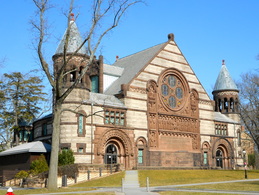
It’s something nearly every Princeton alum has experienced. This feeling—while visiting campus—that the school is no longer yours, that it now belongs to the students streaming out of newly built Whitman College or typing notes in grand but frowsy McCosh 22. You envy these students’ youth. Certainly. But you also envy their enrollment. Now it’s they, not you, who peruse Herodotus on the bottom level of Firestone and party in 81 Spelman; they, not you, who enter the modern-day Parthenon that is Robertson and traipse beneath the rain, the Gothic dorms wet and a darker shade of gray.
As you plod past Whig and Clio, you feel not just older but invisible, like some tired ghost—or if visible, immaterial, no longer part of the school’s intellectual and social engine of precepts and exams, papers and problem sets, eating clubs and late-night Wawa trips.
But, in truth, there is more than one Princeton. There is the Princeton of the student. There is also the Princeton of the alum. And just as the students’ Princeton is no longer yours, your Princeton is not yet theirs. They know nothing of Reunions, where you dance under a tent, cup of beer in hand, and discover that yes, you do still have a few moves left; where you chat with classmates you haven’t seen in years and leave (apologetically) every ten minutes to feed your wailing infant or change his sagging diaper; where you encounter classmates who look great (for their age) and classmates, who, let’s be honest, look like hell. (But who are you to talk? You’ve lost all your hair.) And they most certainly know nothing of Advanced Parenting Calculus, which you studied: a) to figure out just how you’re going to pay your daughter’s unwieldy tuition bill; or b) to become so rich that the punch the bill packs feels more like a pinch.
As these varied Reunion experiences suggest, there is more than one Princeton among alums. Similarly, there is more than one among students. Because I grew up in inner-city DC, my Princeton experience was, let’s say, a tad different from that of many. Academically, I loved the school right away. But outside class and sometimes in, I felt dull and uncultivated. Many of my classmates—at the time, it felt like all—had summered in Saint-Martin, skied the slopes of Innsbruck and experienced the sublimity of La Bohème and Salome. They had attended schools like Choate and Stuyvesant, had no (discernible) gaps in their academic preparation and could speak with great eloquence.
At my inner-city high school, many of my peers had given me a hard time for sometimes “speaking proper.” At Princeton, my classmates spoke that way practically all the time. DC was segregated even in the late 80s, so in high school it was mainly at scholarship receptions in my senior year that I interacted with whites. Uttering words I used mainly when writing, they so thoroughly enunciated and so consistently exercised correct verb conjugation that it had seemed they were speaking a kindred but distinct language, like Portuguese instead of the anticipated Spanish. Conversing with them revealed I couldn’t speak standard English for long without feeling pressure on my lungs and aching to come up for air, to breathe the protean, metaphoric idiom that is “black English.” (Admittedly, “black English” is problematic: not every black person uses it, it varies by region and some blacks reject the concept altogether.)
By freshman year at Princeton, I could remain submerged longer. But not as long as my new classmates. So I worked harder, and soon I could remain submerged all day. This achievement, along with my grades, gave me confidence, which combatted the inferiority I felt for not having experienced operas and traveled overseas. And I learned to value my inner-city background and the rich cultural experiences it did provide. The perspicacity I demonstrated in precepts and the unique lunch-table contributions I made as someone who could quote, in the same breath, Slick Rick and T.S. Eliot earned me a place in the school’s student community. Upon graduation, Princeton was my Princeton, too, and it remains one of the most treasured experiences of my life.
To the relief, indifference or scorn of some, I am neither the first nor the last black male to enter Old Nassau by way of the inner city. As a sophomore, I got to know a freshman with the “same” background (he grew up in Brooklyn). His Princeton experience was both similar and different. Character traits, in combination with other factors (when you attended, hometown, race, class, gender, sexual orientation), make it such that any number of Princetons are possible.
An alum who is an administrator on campus shared an anecdote: during Reunions some older alums grumbled that the student body looks so different now, that it has so many people of color. The administrator responded that the student body should look different since our country looks different. (The U.S. Census Bureau projects that by 2044 whites will be the minority; people of color, the majority.) Perhaps, there are also alums who bemoan that the school now has more women and more individuals who are openly gay, lesbian, transgender or genderqueer.
But Princeton does not belong to any single person, group or generation. The school must evolve as the country evolves. That it does explains, in part, why it abides as a preeminent institution of learning, as what any sensible alum would agree is a constant but ever-changing gathering of some of the best young minds in the country and the world.
Though there are many Princetons, there is still one. And this Princeton makes the many possible. It exists not in spite of but because of the many, which together form, however improbably, a harmony beyond discord.
As you plod past Whig and Clio, you feel not just older but invisible, like some tired ghost—or if visible, immaterial, no longer part of the school’s intellectual and social engine of precepts and exams, papers and problem sets, eating clubs and late-night Wawa trips.
But, in truth, there is more than one Princeton. There is the Princeton of the student. There is also the Princeton of the alum. And just as the students’ Princeton is no longer yours, your Princeton is not yet theirs. They know nothing of Reunions, where you dance under a tent, cup of beer in hand, and discover that yes, you do still have a few moves left; where you chat with classmates you haven’t seen in years and leave (apologetically) every ten minutes to feed your wailing infant or change his sagging diaper; where you encounter classmates who look great (for their age) and classmates, who, let’s be honest, look like hell. (But who are you to talk? You’ve lost all your hair.) And they most certainly know nothing of Advanced Parenting Calculus, which you studied: a) to figure out just how you’re going to pay your daughter’s unwieldy tuition bill; or b) to become so rich that the punch the bill packs feels more like a pinch.
As these varied Reunion experiences suggest, there is more than one Princeton among alums. Similarly, there is more than one among students. Because I grew up in inner-city DC, my Princeton experience was, let’s say, a tad different from that of many. Academically, I loved the school right away. But outside class and sometimes in, I felt dull and uncultivated. Many of my classmates—at the time, it felt like all—had summered in Saint-Martin, skied the slopes of Innsbruck and experienced the sublimity of La Bohème and Salome. They had attended schools like Choate and Stuyvesant, had no (discernible) gaps in their academic preparation and could speak with great eloquence.
At my inner-city high school, many of my peers had given me a hard time for sometimes “speaking proper.” At Princeton, my classmates spoke that way practically all the time. DC was segregated even in the late 80s, so in high school it was mainly at scholarship receptions in my senior year that I interacted with whites. Uttering words I used mainly when writing, they so thoroughly enunciated and so consistently exercised correct verb conjugation that it had seemed they were speaking a kindred but distinct language, like Portuguese instead of the anticipated Spanish. Conversing with them revealed I couldn’t speak standard English for long without feeling pressure on my lungs and aching to come up for air, to breathe the protean, metaphoric idiom that is “black English.” (Admittedly, “black English” is problematic: not every black person uses it, it varies by region and some blacks reject the concept altogether.)
By freshman year at Princeton, I could remain submerged longer. But not as long as my new classmates. So I worked harder, and soon I could remain submerged all day. This achievement, along with my grades, gave me confidence, which combatted the inferiority I felt for not having experienced operas and traveled overseas. And I learned to value my inner-city background and the rich cultural experiences it did provide. The perspicacity I demonstrated in precepts and the unique lunch-table contributions I made as someone who could quote, in the same breath, Slick Rick and T.S. Eliot earned me a place in the school’s student community. Upon graduation, Princeton was my Princeton, too, and it remains one of the most treasured experiences of my life.
To the relief, indifference or scorn of some, I am neither the first nor the last black male to enter Old Nassau by way of the inner city. As a sophomore, I got to know a freshman with the “same” background (he grew up in Brooklyn). His Princeton experience was both similar and different. Character traits, in combination with other factors (when you attended, hometown, race, class, gender, sexual orientation), make it such that any number of Princetons are possible.
An alum who is an administrator on campus shared an anecdote: during Reunions some older alums grumbled that the student body looks so different now, that it has so many people of color. The administrator responded that the student body should look different since our country looks different. (The U.S. Census Bureau projects that by 2044 whites will be the minority; people of color, the majority.) Perhaps, there are also alums who bemoan that the school now has more women and more individuals who are openly gay, lesbian, transgender or genderqueer.
But Princeton does not belong to any single person, group or generation. The school must evolve as the country evolves. That it does explains, in part, why it abides as a preeminent institution of learning, as what any sensible alum would agree is a constant but ever-changing gathering of some of the best young minds in the country and the world.
Though there are many Princetons, there is still one. And this Princeton makes the many possible. It exists not in spite of but because of the many, which together form, however improbably, a harmony beyond discord.









 RSS Feed